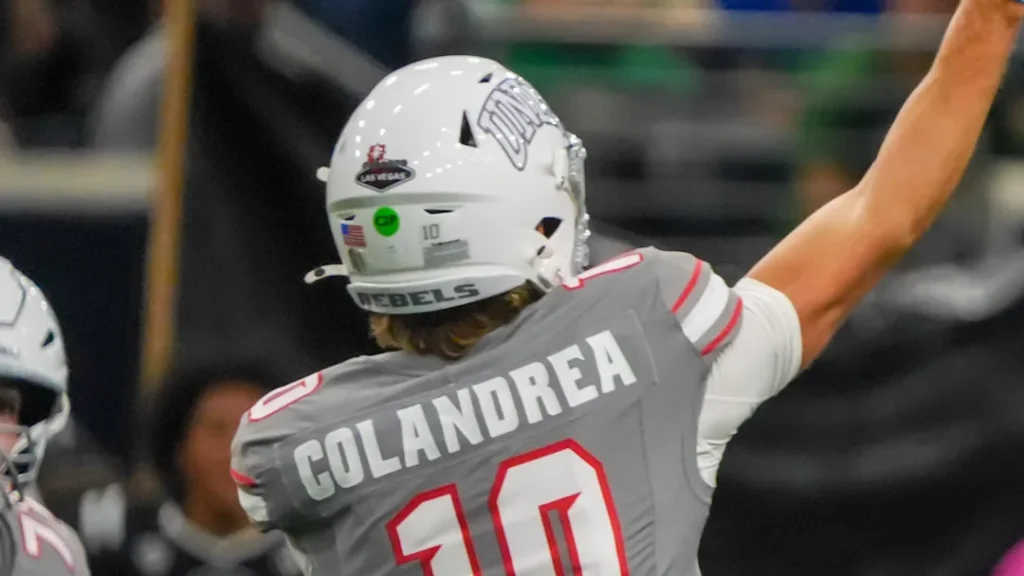
The era of «playing it safe» in Lincoln is officially over, and Anthony Colandrea is the man leading the charge with a level of confidence that hasn’t been seen at Memorial Stadium in years. In a recent, explosive interview with On3’s Pete Nakos, the former UNLV star and Mountain West Player of the Year made it crystal clear that he didn’t transfer to Nebraska to be a «middle-of-the-road» signal-caller.
While national analysts suggest the Huskers would be lucky to scrape together six or seven wins, Colandrea is publicly revolting against that narrative, aiming for the college football playoffs. As Colandrea told Pete Nakos:
«I’m not coming here to just win eight or nine games. I want to win a national championship; I want to go to the playoffs… We want to win 11, 12 games. We’ve got to go win. That’s the biggest thing.»
Shattering the «Eight-Win» Glass Ceiling
Colandrea’s bold claims are a direct challenge to the «culture of hoping not to lose» that many critics say has plagued the Matt Rhule era. The quarterback revealed that upon his arrival, he felt a strange sense of complacency where an eight-win season was viewed as a successful «bar» for the program, a mentality he found unacceptable for a team with Nebraska’s history.
This «swagger» is exactly what the Husker faithful have been craving—a leader who isn’t afraid to put a target on his back and demand greatness from his teammates, even if it means facing intense scrutiny from a national media waiting for him to stumble. By setting the expectation at 12 wins, Colandrea is forcing a psychological shift in the locker room, demanding that his peers play with the aggression required to dominate the Big Ten.
The Tactical Gamble and the Road to Glory
Despite the excitement, this championship talk comes with a heavy dose of skepticism from analysts who point to Colandrea’s history of turnover issues when facing high-level Power conference defenses. However, there is a growing belief in Lincoln that he is the perfect tactical fit for Dana Holgorsen’s high-octane offensive scheme, a system that rewards the «gunslinger» mentality and vertical threats where previous QBs often hesitated. For a fan base that hasn’t seen an eight-win season since 2016, Colandrea isn’t asking for permission to be great; he is commanding the spotlight. If the Huskers can back up this talk on the field, Colandrea won’t just be another name in the record books—he will be the catalyst that finally knocked down the wall of frustration in Nebraska.