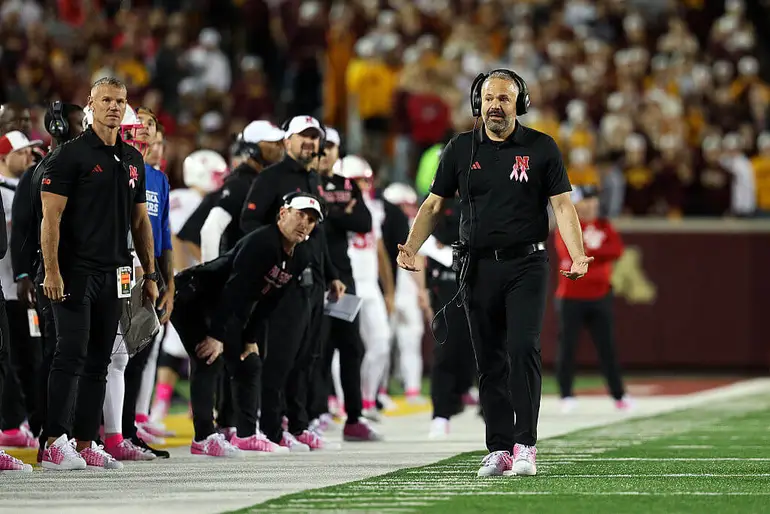
LINCOLN, Neb. — Over the past quarter-century, coaching staff upheaval at the University of Nebraska has become a familiar herald of program instability. Every four to six years, sitting head coaches have attempted to salvage their tenures by cleaning house, a desperate maneuver that historically preceded their own departures. As Matt Rhule enters his fourth season with the Cornhuskers, he finds himself triggering this cycle once again, albeit under drastically different college football dynamics. Following consecutive seasons of turnover, Rhule’s newly restructured unit faces its first official test Saturday against Ohio, leaving observers to question whether this staff overhaul will break Nebraska’s decades-long curse or accelerate its pattern of failure.
Historically, the precedent for head coaches surviving major staff reshuffles in Lincoln is remarkably thin. Since the end of Tom Osborne’s era, four of the last five coaches who executed sweeping staff changes—Frank Solich, Bill Callahan, Mike Riley, and Scott Frost—were terminated within twelve months of making the adjustments. Only Bo Pelini in 2011 managed to navigate major coordinator and assistant departures without a total collapse, though his program notably lost its competitive edge shortly thereafter. Rhule, however, has engineered back-to-back off-seasons of turnover, introducing new key figures including defensive coordinator Rob Aurich, run game coordinator Lonnie Teasley, and offensive line coach Geep Wade, alongside several key defensive assistant hires.
Despite the daunting historical data, the modern landscape of college athletics offers Rhule structural advantages unavailable to his predecessors. Driven by unlimited staff size regulations and the roster fluidity of the transfer portal, staff movement has become standard industry practice rather than a symptom of terminal program distress. Nebraska general manager Pat Stewart and Rhule have leveraged these modern mechanisms heavily, assembling a roster where up to 15 of 22 projected starters arrived via the portal over the last two years. By prioritizing experienced Power 4 transfers over long-term developmental projects, particularly along the offensive and defensive trenches, the program aims to minimize the traditional learning curve associated with a newly assembled coaching staff.
The ultimate measure of Rhule’s aggressive restructuring will depend on immediate execution in an increasingly volatile Big Ten conference. With eleven SEC programs and twelve Big Ten teams entering the current season featuring new coordinators, high staff turnover reflects a broader national trend dictated by expanding budgets and mobile talent. While new defensive coordinator Rob Aurich remains focused on tactical preparation rather than the historical weight of his role, Rhule acknowledges the cold reality facing his revamped program. In an era defined by constant movement, the tenure of Nebraska’s leadership will ultimately be judged not by the volume of changes made, but by the tangible performance delivered on the field.